
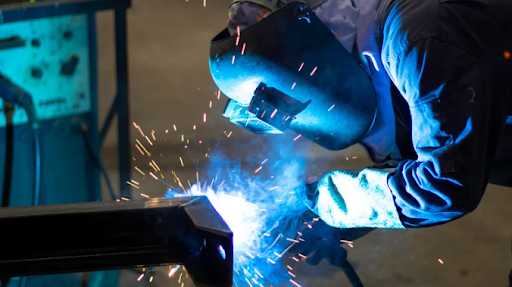
Designing an effective air-quality management strategy for a large facility with multiple welding bays poses unique challenges. A one-size-fits-all approach often fails, leaving pockets of contaminated air and exposing workers to harmful fumes. Proper engineering requires a holistic view of the entire space to ensure consistent and reliable air purification across all workstations. Installing a professionally designed, large room welding ventilation system is the only way to address the complexities of a multi-bay layout. Experts must balance airflow, manage cross-contamination, and ensure every welder is protected, regardless of their location on the production floor.
Achieving Balanced Airflow Across All Bays
The primary challenge in a multi-bay setup is ensuring each welding station receives adequate ventilation without adversely affecting adjacent areas. An improperly balanced system can create drafts that pull fumes from one bay directly into another, compounding the air quality problem. Professionals use sophisticated airflow modeling to design a system that provides consistent suction at every station while maintaining overall environmental stability. This prevents the creation of dead zones where contaminated air can accumulate.
Calculating System Capacity and Static Pressure
A multi-bay system requires careful calculation of the total required airflow, or cubic feet per minute (CFM), and the static pressure the fan must overcome. Each bay adds to the total length of ductwork and the number of hoods, increasing system resistance. Professional engineers determine the precise fan capacity needed to maintain effective capture velocity at the furthest bay from the main unit. This ensures that no single station is left with weak or inadequate fume removal, which is a common failure point in poorly designed systems.
The Importance of Strategic System Layout
The physical layout of the ductwork and extraction points is critical to the system’s success. It’s not just about connecting a series of hoods to a fan; it’s about creating an efficient pathway for contaminated air to travel. The debate over TEKA vs traditional ventilation often highlights the effectiveness of capturing fumes at the point of creation, which is even more critical in a multi-bay setup. Professionals design ducting with smooth, gradual bends and appropriately sized diameters to minimize resistance and maintain consistent air velocity.
Preventing Cross Contamination Between Workstations
In a busy workshop, activities in one bay can easily affect the air quality in another. Without a properly zoned and balanced ventilation system, fumes can drift and settle throughout the facility. Professionals may design partitioned systems or use strategically placed ambient air cleaners to supplement source capture units. This layered approach creates a comprehensive air quality solution that contains contaminants within their designated zones, protecting all employees on the shop floor. An expertly designed system accounts for the dynamic nature of a multi-bay environment.
Conclusion
Engineering a ventilation system for a large, multi-bay welding facility is a complex task that demands professional expertise. Balancing airflow, calculating precise system capacity, and designing a strategic layout are essential for ensuring the safety and productivity of the entire workforce. Relying on experts to manage these critical design considerations prevents the common pitfalls of inadequate ventilation and cross-contamination. Investing in a professionally designed system is a fundamental commitment to operational excellence and employee wellbeing.